

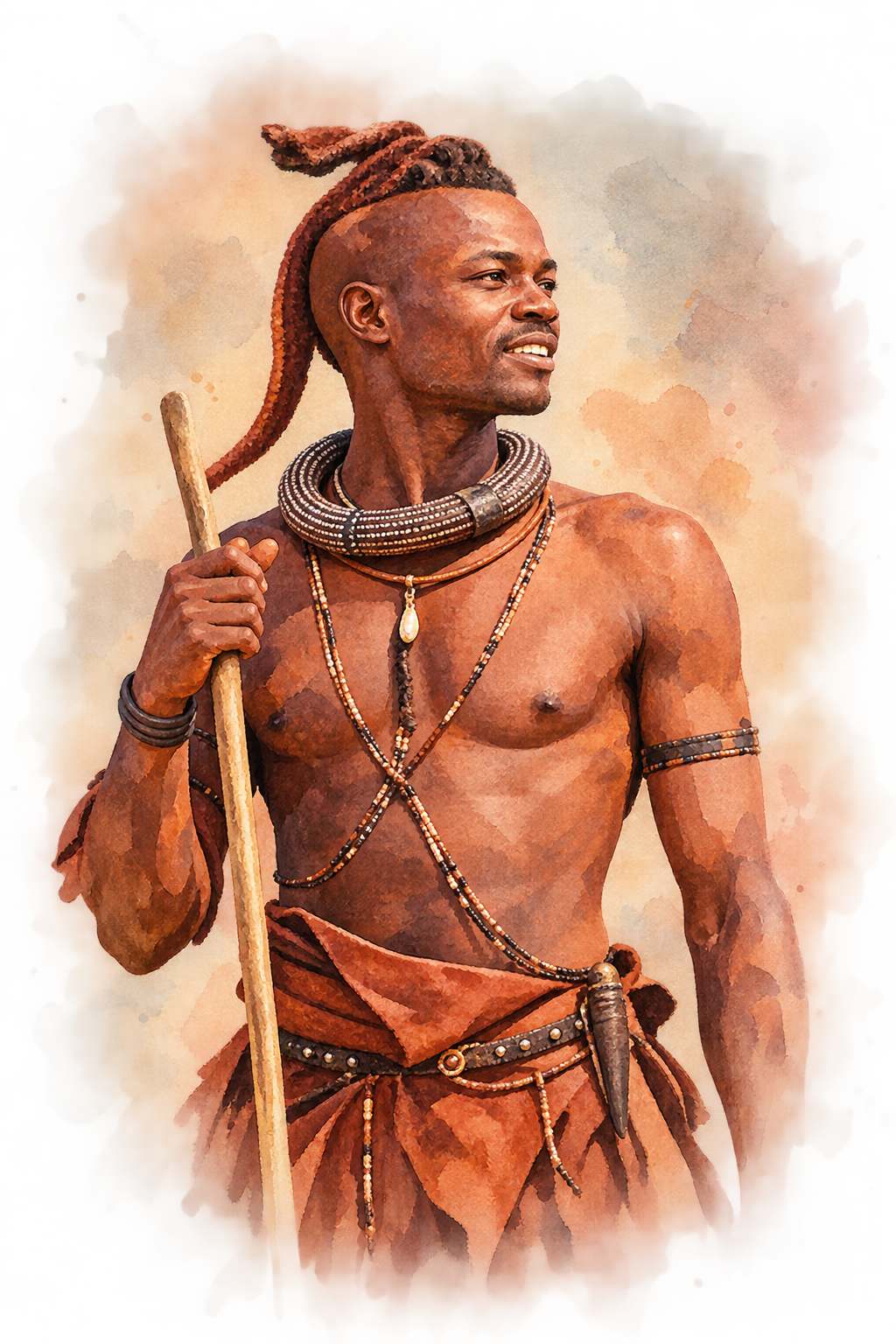
Ovahimba
Ovahimba communities are associated especially with north-western Namibia and neighbouring Angola. Otjiherero, livestock, family institutions and environmental knowledge connect their histories with a wider cultural world, while community names and contemporary circumstances vary.
Names and terminology
Ovahimba; OvaHimba; Himba (common English form); OvaHerero of Kaokoland (preferred in the 2024 community protocol)
- Languages
- Otjiherero varieties; multilingual usage
- Geographic associations
- North-western Namibia, particularly Kunene; related communities in neighbouring Angola; residents elsewhere in Namibia
- Scope of this article
- An umbrella identity with internal diversity
- Community-authored source
- Kaokoland biocultural protocol (2024)
Overview
Ovahimba is a widely used name, but it is not universally preferred. The 2024 Biocultural Community Protocol of the OvaHerero of Kaokoland in Namibia and Angola explicitly favours OvaHerero of Kaokoland for the people it represents. This page retains the familiar title while recognising that stated preference and the importance of asking people how they identify.
Geographic associations
North-western Namibia, particularly Kunene; related communities in neighbouring Angola; residents elsewhere in Namibia
These associations do not define exclusive territories or the residence of every community member.
Communities and place
Kunene contains several communities with different identities, histories and livelihoods. Older sources often call its northern part Kaokoland. That historical name is useful in context, but is not a synonym for the whole present-day Kunene Region or an exclusive ethnic territory.
The Kunene 2023 Census profile records Ovahimba and Ovaherero categories and a combined Ovadhimba/Ovazemba category. It therefore cannot support the claim that this table counts Ovadhimba and OvaZemba separately. Nor should census categories be treated as a final ruling on relationships between those communities. Otjiherero varieties are important here, alongside multilingual communication and cross-border connections.
Livestock, land and movement
Livestock keeping links households to grazing, water and relationships with other families. Movement in response to pasture and water can be an organised part of pastoral production; it should not be mistaken for aimless wandering. Drought, access to land and the location of services affect what different households can do.
The Kaokoland community protocol sets out concerns about land, livelihoods and the use of cultural knowledge. It is also a contemporary political document: the communities involved are stating how outsiders, researchers and decision-makers should engage with them. It does not merely describe practices for visitors to observe.
Family and cultural practice
Research among Himba pastoralists describes double descent: relationships through both maternal and paternal lines have different social roles. A 2019 study also found changing preferences about livestock inheritance. That evidence challenges the idea of an unchanging system, but its particular research population should not be generalised to every family.
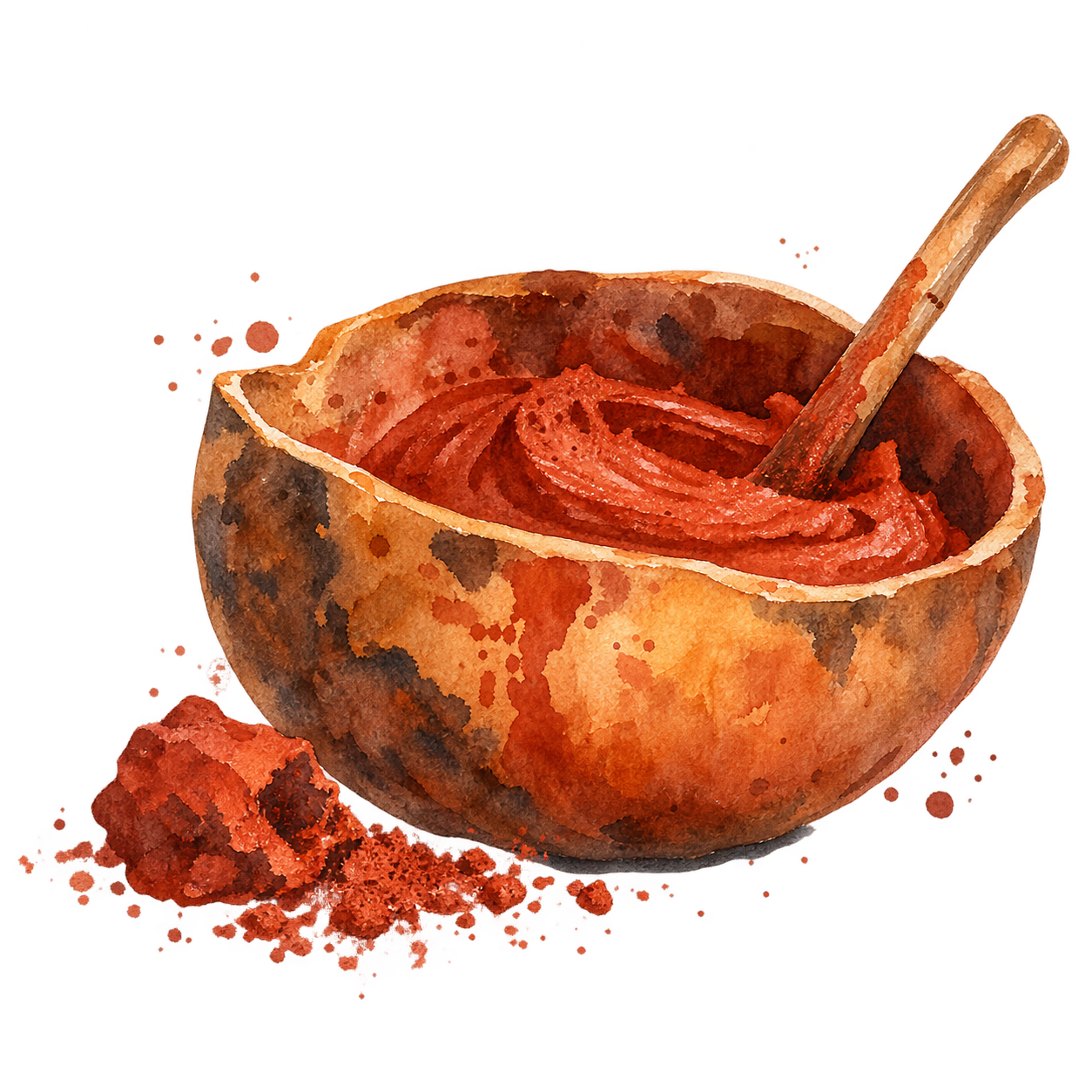
Otjize is associated especially with women’s skin and hair adornment and commonly combines ochre with fat. Its preparation and use have cultural meanings beyond appearance. Laboratory research on ochre pigments does not establish that every preparation is a clinically proven sunscreen. Dress, hairstyles and adornment also vary with age, circumstances and individual choice.
Ancestral relationships and the sacred fire feature in accounts of religious life. These practices require community explanation, not an assumption that every household has the same beliefs. They can coexist with other religious affiliations and changes in family life.
Education and contemporary choices
Opuwo is a regional centre for administration, trade and services. Rural residence, town life and movement between them form part of the present-day context. Kunene’s 2023 Census profile records education, household services and livelihoods across the region. Those regional findings describe a diverse population, not Ovahimba alone.
Education, inheritance and livelihood decisions can involve debate within families. A person’s choice of dress, school or workplace is not a reliable measure of whether they have retained their identity. Contemporary community protocols and research document active negotiation of change.
Visiting respectfully
Arrange visits through people authorised by the household or community, agree payment and photography beforehand, and respect a refusal. Never enter a sacred-fire area, handle objects or photograph intimate activities without explicit permission. A demonstration offered to visitors represents that encounter, not the entire life of the people taking part.
Sources and review
Sources: OvaHerero of Kaokoland in Namibia and Angola, Biocultural Community Protocol, 2024, especially introduction and glossary; NSA, Kunene 2023 Census regional profile, ethnicity tables; The disequilibrium of double descent: changing inheritance norms among Himba pastoralists, 2019; Scientific Reports, ochre pigment study, 2022. Reviewed 7 October 2026. Census references describe the 2023 enumeration; later publication dates do not make them 2026 population counts.



.png?width=82&height=85&name=Navigate%20Namibia-03%20(1).png "Navigate Namibia")