

The landscape along the rivers in the eastern Zambezi region is a green-blue water paradise. The Zambezi River, in particular, overflowed its banks and filled the so-called flood plains. Due to its higher water level, it floods the Chobe River, which flows into it, and causes it to flow upstream.
Water levels at Katima Mulilo this week far exceeded those of previous years. The cause is unusually heavy rainfall in the Zambezi catchment areas in Angola, Zambia, and northern Botswana.
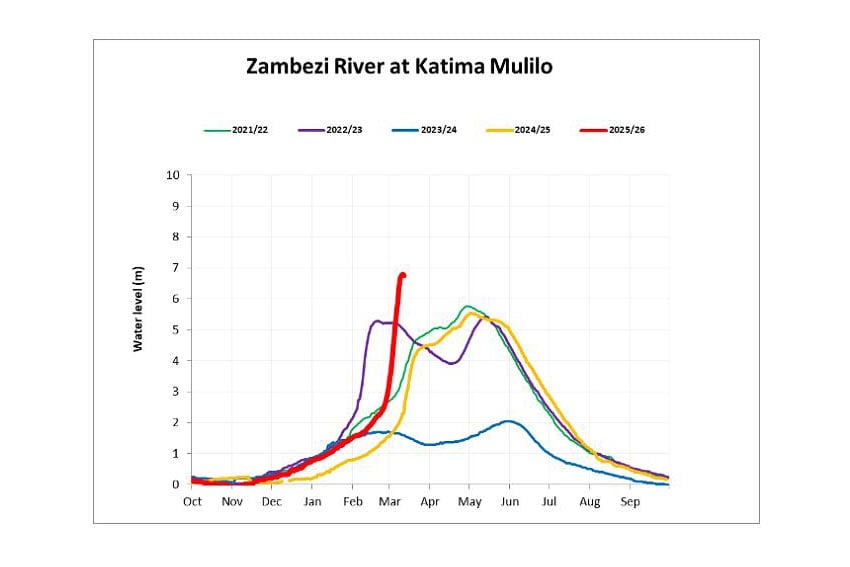
The Zambezi River level at Katima Mulilo is significantly higher this year than in previous years. Graphic: Daily Flood Bulletin of the Hydrological Service Namibia from 11 March 2026
The floods are increasingly inundating roads. Local authorities have urged residents of low-lying areas to evacuate as soon as possible (see today's report in The Namibian). Several villages are now only accessible by water.
The same applies to many camps and lodges. However, most of their guests arrive via fly-in safaris in small planes. Almost all accommodations in the Zambezi region are prepared for the annual floods and remain open. If access roads are flooded, they will pick up self-drive guests by boat.

By boat to the bungalow: Built on stilts, the chalets transform into romantic refuges in the water world during floods. Photo: Gondwana Collection Namibia
The annual floods of the Zambezi, Kwando and Okavango rivers in northeastern Namibia are part of the natural cycle. They are essential for replenishing the natural water reserves. Many wildlife species give birth to their young during this time of abundance.
Ideal opportunity to experience this water paradise
Visitors to Namibia can currently experience the Zambezi region in a paradisiacal state that is unlikely to be repeated anytime soon. You come across young zebras, lechwes and impalas that are only a few days old. Elephant calves curiously and playfully explore their surroundings.
Not to mention the diverse, colourful birdlife. With the rains come many migratory birds from Europe and Asia. You can spot waterbirds such as grey herons, wattled cranes and Pel's Fishing Owls, African finfoots, various kingfishers and, of course, the African Fish Eagle.
Photographers are captivated by the emerald-green landscapes, mirror-like water surfaces and atmospheric storm clouds. After afternoon thunderstorms, spectacular sunsets often follow in the evening.
Meteorologists are forecasting further good rainfall in the catchment areas. Namibia holidaymakers can therefore likely continue to experience the water world along the rivers for months to come. Self-driving tourists should allow for some flexibility in their journey times and check local road conditions shortly before setting off.
Where there is water, mosquitoes are naturally to be expected. However, accommodations are well prepared for this. Beds are fitted with mosquito nets. Furthermore, these uninvited guests can be kept at bay by wearing light-coloured clothing and using anti-mosquito spray.
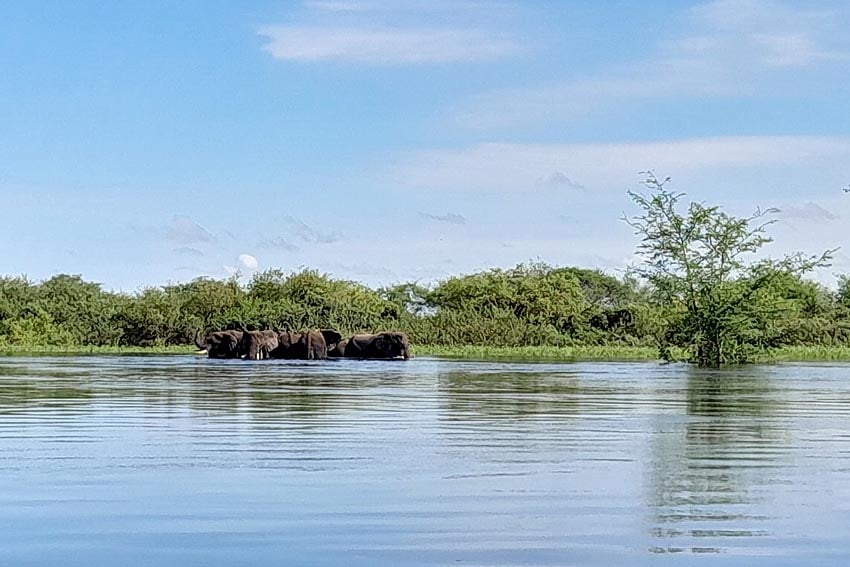
A group of elephants crossing the Zambezi River near the Zambezi Mubala Lodge, about 40 km from Katima Mulilo. Photo: Gondwana Collection Namibia
.png?width=82&height=85&name=Navigate%20Namibia-03%20(1).png "Navigate Namibia")
SUBMIT YOUR COMMENT