

Globally, vertebrate populations have declined by nearly three-quarters. The rate of species extinction has increased drastically. These are key findings from the World Wildlife Fund (WWF) 2026 Living Planet Report. According to the WWF's Namibian branch, the example of Namibia demonstrates that conservation can succeed – and shows how.
In the 2026 Living Planet Report, the WWF presents alarming findings. The report draws on the Living Planet Index (LPI) from the Zoological Society of London (ZSL). The LPI tracks 35,803 population trends across 5,790 vertebrate species: mammals, birds, fish, reptiles, and amphibians.
According to the data, populations of these species shrank by approximately 73 percent between 1970 and 2022. Vertebrates in freshwater habitats have suffered the greatest decline (-85%), followed by those in terrestrial (-69%) and marine (-59%) habitats.
Biologists are even more concerned about species extinction. According to the WWF report, the rate at which species are disappearing is now one hundred times higher than it was before the spread of humans.
The primary drivers remain the expansion of agriculture – which destroys habitats – and the production and consumption of fossil fuels, which fuel climate change. Capital flows into environmentally damaging economic sectors rather than filling funding gaps in nature conservation.
However, there are also encouraging and motivating messages. Around half of the populations tracked by the LPI are stable or even increasing. As WWF Namibia noted in its press release, this demonstrates that "where sustained action is taken, species and ecosystems can recover."
Successes in elephant and rhino conservation
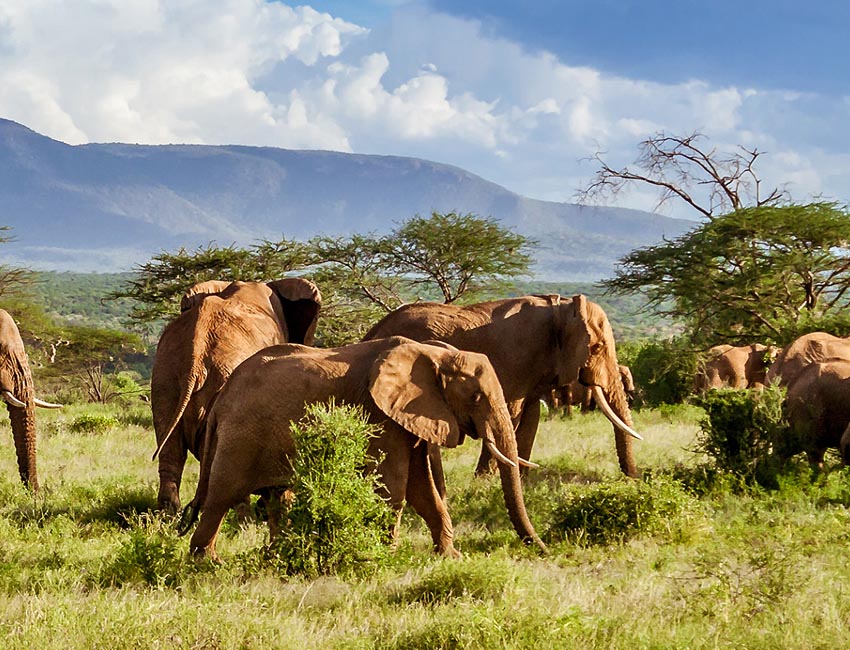
One of Namibia's conservation success stories: elephant populations are stable or even increasing. Photo: 2026 Living Planet Report
Elephants and black rhinos serve as concrete examples from southern Africa. In the Kavango-Zambezi Transfrontier Conservation Area (KAZA), habitats are interconnected and protected by local communities. Both factors contribute to stable or growing elephant populations.
Regarding rhinos, WWF Namibia cites the latest report by Indileni Daniel, the Minister of Environment, Forestry and Tourism (MEFT). She announced in late September that 43 poached rhinos had been recorded in 2025 (see report by The Namibian). This represents a decline of more than half compared to 2024, when there were 91 cases.
According to Daniel, the figure stood at 24 by the end of September this year, raising hopes for a further decline in 2026. Experts attribute this success primarily to joint and coordinated efforts (see also the report on Namibian.org).
The parties involved include the MEFT, the police, the army, the revenue authority (NamRa), and the Anti-Corruption Commission (ACC). They are joined by communities, national and regional non-governmental organisations, private companies and donors. The 'Blue Rhino Task Team' plays a key role, coordinating cooperation among law enforcement agencies and processing and managing relevant data.
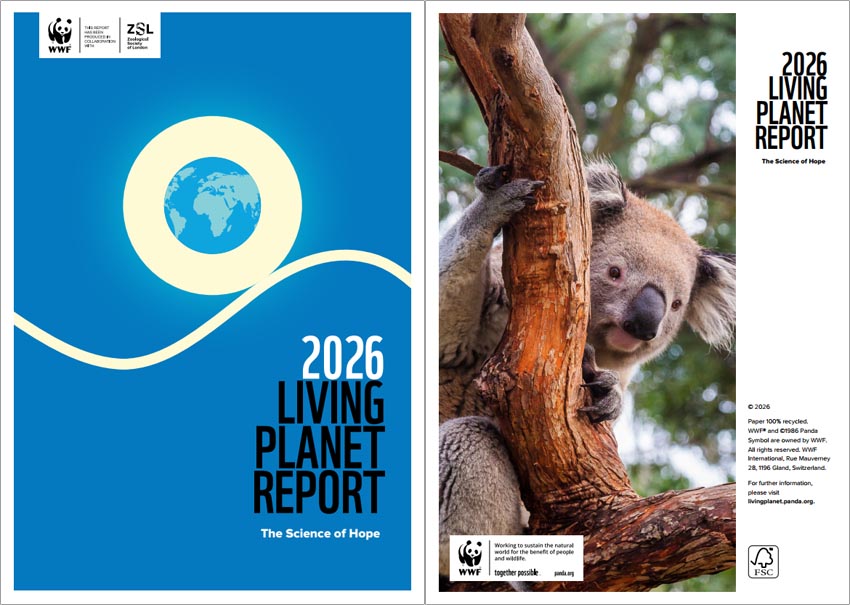
Cover of the 120-page 2026 Living Planet Report by the WWF.

.png?width=82&height=85&name=Navigate%20Namibia-03%20(1).png "Navigate Namibia")
SUBMIT YOUR COMMENT