
Vacationers in Namibia do not need to worry that the pumps at the gas station will soon run out of petrol or diesel. Even after the anticipated price increases, fuel prices per liter remain well below those in Europe.
In a media release, the government officially dismissed rumors of a fuel shortage (see also today's report in the Namibian). "The country remains adequately supplied with fuel [...] to meet the daily fuel needs [...] for the short, medium and long term." No rationing measures were implemented because they were unnecessary.
The government did not specify the reason for its serenity. However, it can be summarised in one sentence, based on cross-checked AI research. Namibia primarily sources its fuel from countries whose refineries are not as severely affected by the Strait of Hormuz crisis.
These include India, Oman, the Netherlands, and Italy. These include India, Oman, the Netherlands, and Italy. As Namibian.org learned from insider sources, Namibia has already changed its supplier mix, apparently in anticipation of the crisis. 80 percent of its fuel now comes from Nigeria, they say. The West African country is itself an oil producer.
Fuel reserves for three months
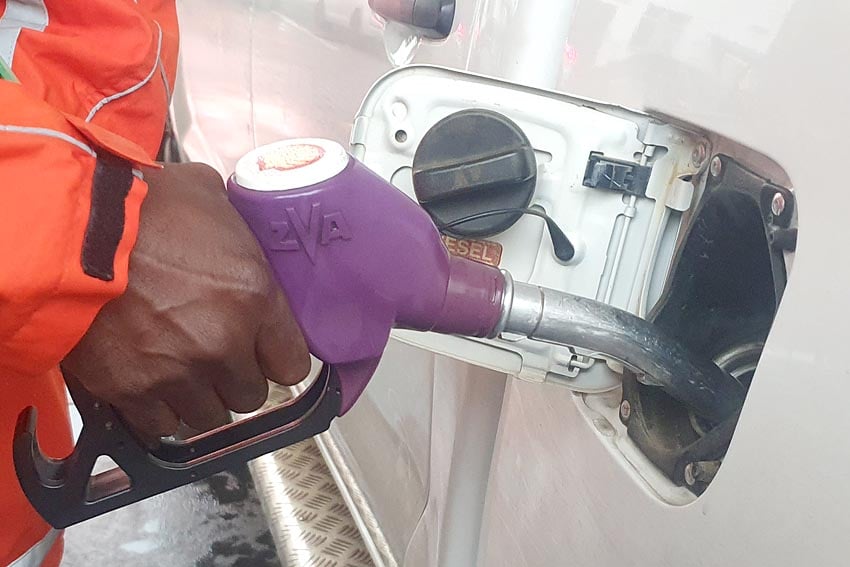
Despite the war with Iran, there is no threat of a fuel shortage at Namibian petrol stations. Photo: Sven-Eric Stender
Furthermore, according to the National Petroleum Corporation of Namibia (Namcor), Namibia currently has strategic reserves sufficient for three months. In addition, private fuel companies (intermediaries and service station chains), are legally required to maintain reserves for at least 30 days.
The main fuel depot, the National Oil Storage Facility (NOSF), is located in Walvis Bay. From there, the fuel is transported primarily by rail to depots inland. Key locations include Windhoek, Otjiwarongo, Ondangwa, Gobabis, Mariental, and Keetmanshoop.
Of course, it is clear that fuel prices will rise, as they do in all countries worldwide. However, unlike the situation in Europe, where prices change several times a day. Namibia's fuel prices remain fixed for a month.
The Ministry of Mines and Energy (MME) sets the rates for diesel and petrol at the beginning of each month. The National Energy Fund (NEF) helps to cushion large price fluctuations.
The effective date for a price adjustment is always the first Wednesday of the month at 0:00. Despite the start of the Iran War at the end of February, the MME decided to leave the prices for March unchanged on Wednesday, 4 March 2026.
According to a public announcement from the Ministry dated 2 March 2026, the following fuel prices per liter currently apply:
Petrol (ULP 95) - N$ 19.58,
Diesel (50 ppm) - N$ 19.63,
Diesel (10 ppm) - N$ 19.73.
Fuel in Namibia half as costly as in Europe
European tourists are likely to be (positively) shocked. Converted, this is currently about € 1 per liter (amount at current exchange rate; N$ 1 = ZAR 1). This makes driving in Namibia almost half as expensive as in some parts of Europe.
However, Namibians fear a significant price increase on 1 April 2026. While the increase is usually in the two-digit cent range, the figure being discussed is 4 N$ per liter. That would represent a rise of around 20 percent. Long queues could therefore form at gas stations on Tuesday, 31 March 2026.
It is also worth noting that fuel prices vary depending on the distance from the main depot in Walvis Bay. Due to transport costs by rail or tanker truck, you will pay more in Windhoek and elsewhere inland than on the coast.
Incidentally, it's not just the comparatively low prices that make refuelling in Namibia a pleasant experience for European tourists. Because here, petrol station attendants offer a comprehensive service (see also the article 'Refueling' in the 'Travel Advice' section of Namibian.org): refuelling, checking oil and water levels, washing windows...
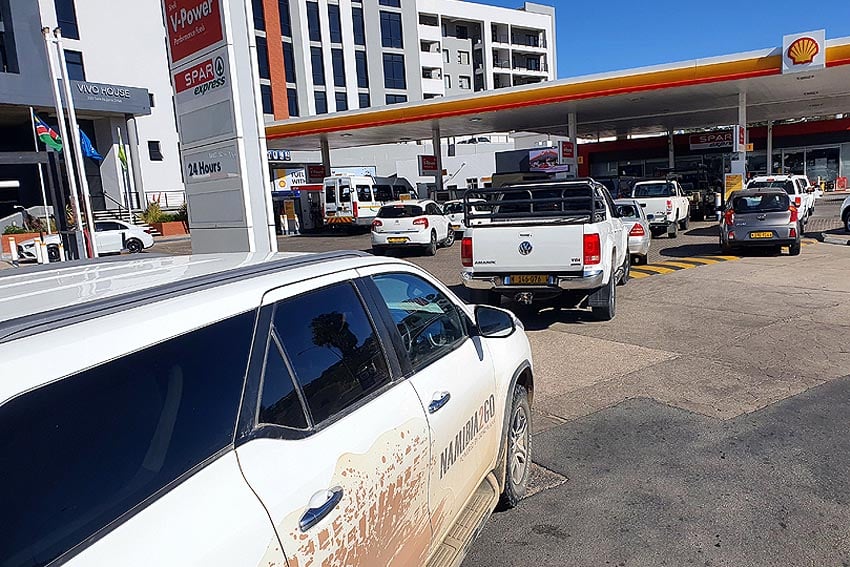
Long queues could form at Namibian petrol stations on Tuesday of next week (31 March 2026). Because on the night of Wednesday, 1 April 2026, petrol and diesel prices are expected to rise significantly. Photo (May 2022): Sven-Eric Stender
.png?width=82&height=85&name=Navigate%20Namibia-03%20(1).png "Navigate Namibia")
SUBMIT YOUR COMMENT