

Usually in September. That's the standard answer to the question: "When is the best time to experience the succulent bloom in Namaqualand?" The same applies to the blooming Namib Desert near Aus, Namibia's Namaqualand. This year, however, the explosion of blossoms seems to be starting as early as July...
As Piet Swiegers of Klein-Aus Vista told Namibian.org upon request, the mountain slopes and plains west of Aus have already transformed into a rolling sea of blossoms. Photos show endless expanses of yellow, blue, purple, white, and red.
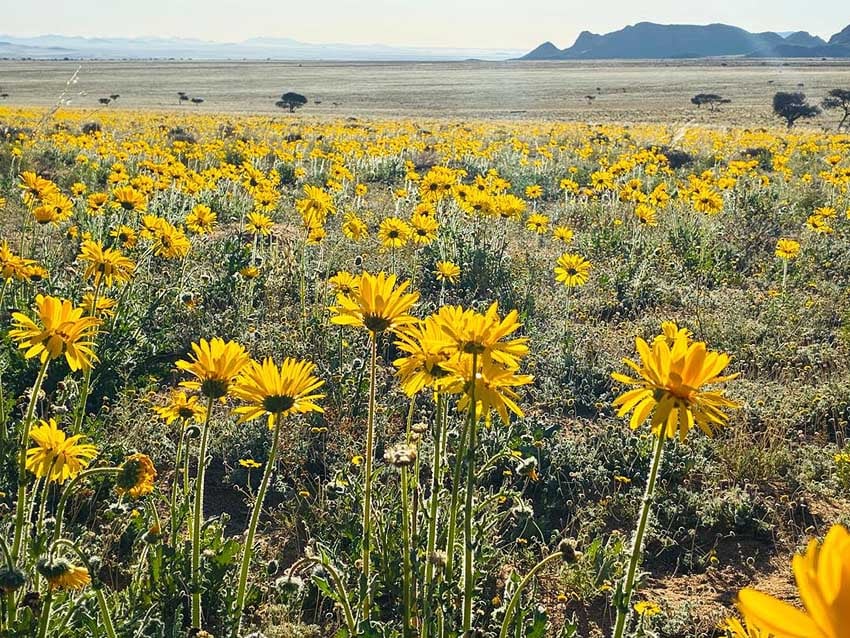
Namibia's Namaqualand in yellow: Blooming desert on the eastern edge of the Namib Desert west of Aus. Photo: Klein-Aus Vista
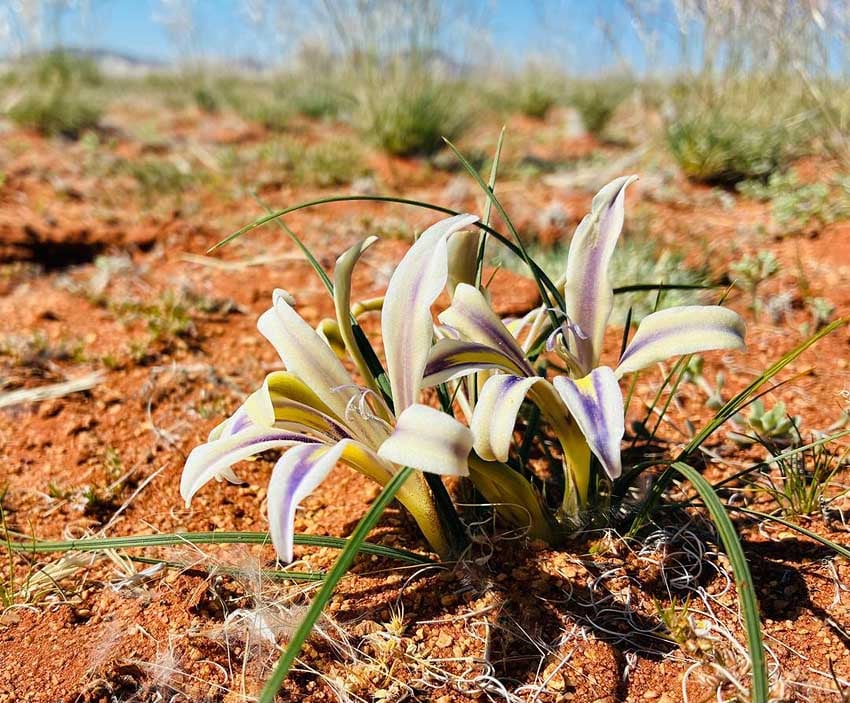
Namibia's Namaqualand in soft pink: Blooming lilies on the eastern edge of the Namib Desert west of Aus. Photo: Klein-Aus Vista
The reason for the very early start of the bloom is likely the exceptionally heavy winter rains that southern Namibia received in June. Two large reservoirs, Neckartal and Naute, overflowed. Due to the floodwaters, hikers had to be evacuated from Fish River Canyon (see report of Namibian.org).
The unusually heavy rainfall in June also occurred in northwestern South Africa. As a result, a superbloom is also expected in Namaqualand (see the report from Tourism Update).
Both regions, Namaqualand and southwestern Namibia, are part of the Succulent Karoo. The water-storing plants respond to the winter rains and typically begin to bloom four to five weeks after heavy rainfall.
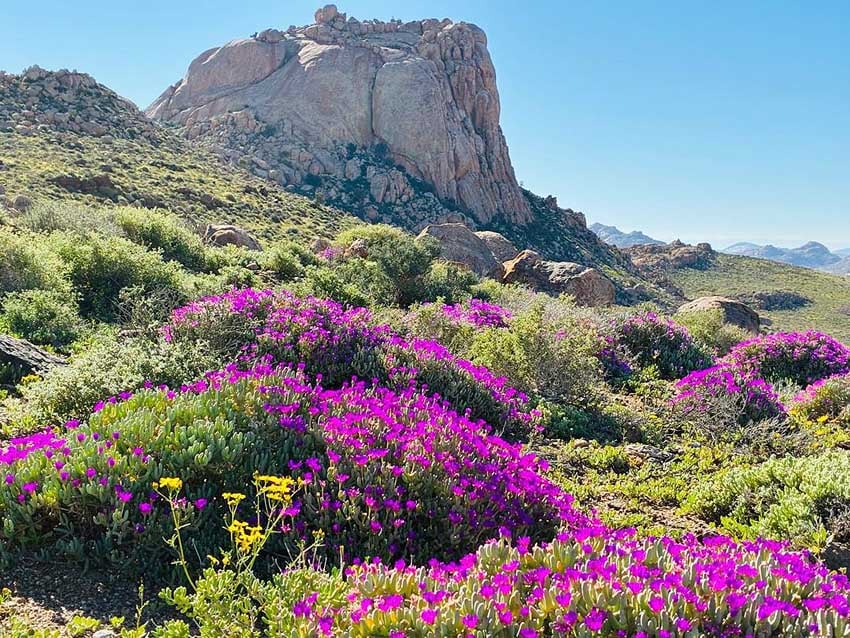
Namibia's Namaqualand in pink: Blooming desert on the eastern edge of the Namib Desert west of Aus. Photo: Klein-Aus Vista
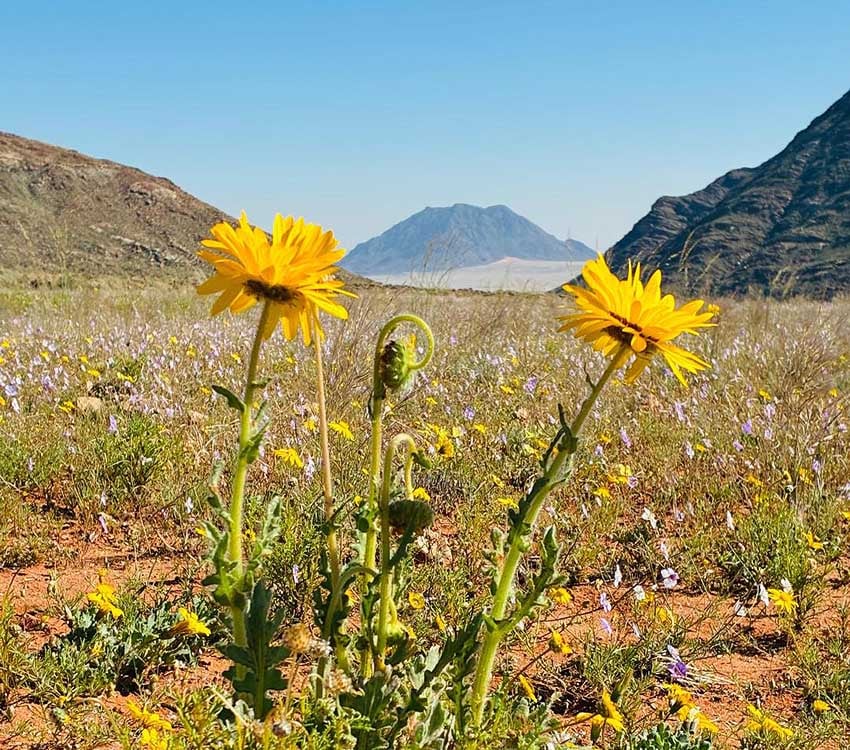
Namibia's Namaqualand in yellow: Blooming desert on the eastern edge of the Namib west of Aus, with the extinct vulcano 'Dikke Willem' in the background. Photo: Klein-Aus Vista

.png?width=82&height=85&name=Navigate%20Namibia-03%20(1).png "Navigate Namibia")
SUBMIT YOUR COMMENT