

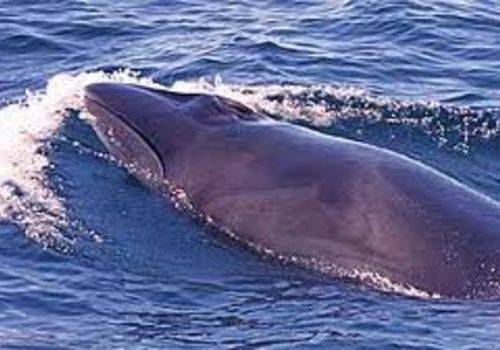
Sei whale
Balaenoptera borealisIntroduction: The Sei Whale (Balaenoptera borealis), is a baleen whale and the third-largest rorqual after the blue whale and the fin whale. They have a slender, streamlined and powerful body with small, pointed flippers and a dorsal fin set about two thirds down the body. They had led a comparatively quiet existence, not important to whalers until the 1960's, when the populations of fin and blue whales had declined.
Estimates are that at least 100,000 sei whales were killed between 1961 and 1979 probably because they are shallow divers who rarely stay submerged for more than periods of 4min. Swimming speed is usually 10km/hr although speeds of up to 30km/hr have been estimated when it has been disturbed.
Distribution: It moves northwards from the Antarctica from April to November, where it can be seen in deeper waters off the coast of Namibia.
Diet: Sei whales skim krill close to the surface.
Colouring: Head and back is dark grey to black or bluish and can appear mottled. The belly is pale grey to white.
Breeding: A single calf is born 4.6m long around May/June time after a gestation period of 11 to 12 months
Size: Maximum length is 20m. Weight: 5 tons
.png?width=82&height=85&name=Navigate%20Namibia-03%20(1).png "Navigate Namibia")