

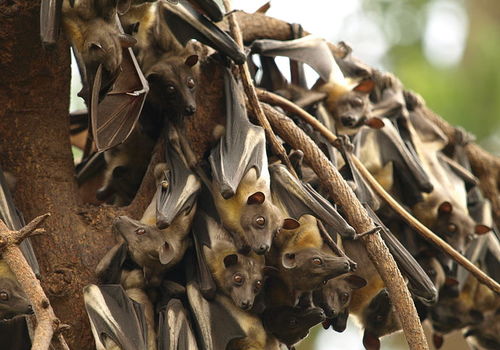
Straw coloured fruit bat
Eidolon helvumIntroduction: The common name of the straw-coloured fruit bat (Eidolon helvum) refers to the fur colour on the shoulders and back. It is the largest bat in the southern sub region. It is common throughout the equatorial forests of Africa and because of it's size, individuals have a migratory range that covers all of southern Africa, including Namibia. This is accounted for by their 'highly developed nomadic urge'. At sundown these bats emerge from their nests and can be found swooping around terrified tourists who are on a safari holiday in Namibia
Distribution: Individually throughout Namibia. Migratory.
Diet: Mangoes, paw-paws, avocados, figs, bananas and passion fruit and other soft, pulpy fruits.
Colouring: Straw-coloured fur on the shoulders and back with darker brown hair on the rump and lighter underparts.
Breeding: A single young is born in November and carried by the mother until it can fend for itself. (But only in the tropical forest region of their range).
Size: Total body length 190mm.
Weight: 240-280g.
Wingspan: 750mm.
.png?width=82&height=85&name=Navigate%20Namibia-03%20(1).png "Navigate Namibia")