
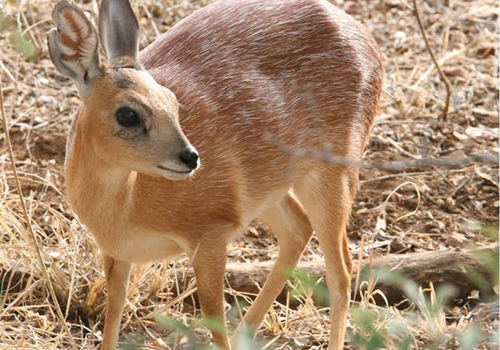
Sharpes grysbok
Raphicerus sharpeiIntroduction: Sharp's grysbok (Raphicerus sharpei) are a secretive little animal, living alone or in mother and offspring combinations. This makes them very difficult to observe and together with the colouration, they can easily be lost in a sea of bushes and amongst boulders. Scent glands are on both hind and forefeet; a feature used for communication. Old aardvark holes have been used as places of refuge in times of danger.
Distribution: Chobe River, Linyati Marshes, Nkasa Rupara National Park areas. Very rare.
Diet: They browse on leaves and young shoots of bushes and shrubs, but they also eat flowers and fruit when available. A rather small creature, they are known to sneak into farmland at night and help themselves to cultivated crops.
Colouring: A rich red/brown coat painted with white hairs and buffy-white underparts, neck and insides of the leg.
Breeding: Females usually give birth to a single lamb after a gestation period of 7 months.
Size: Adult males stand around 0.5m at the shoulder. Males have horns that measure from 6-10cm in length.
Weight: 7.5-11.5kg
.png?width=82&height=85&name=Navigate%20Namibia-03%20(1).png "Navigate Namibia")