

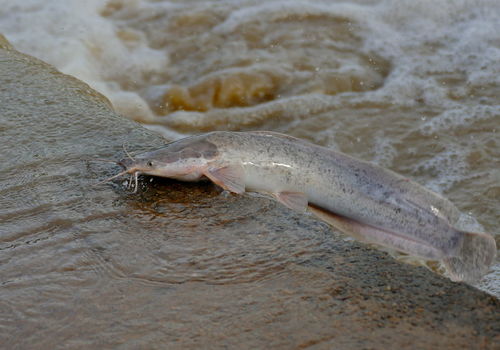
Sharptooth catfish
Clarias gariepinusIntroduction: The sharptooth catfish (Clarias gariepinus) is unique in that it can live in almost any habitat, but it prefers floodplains, large slow moving rivers, lakes and dams. It is a very tough character and can endure the most inhospitable of conditions such as mud or areas of extremely low water content. They hunt in packs preying on smaller fishes. They are preyed upon by man, leopards, crocodiles and birds, especially the African fish eagle and the marabou stork. They can live for 8 years or more.
This is confirmed by its presence in diminishing pools of water, drying lakes or rivers when other freshwater fishes have long gone. They will form burrows and move overland under damp conditions if it has to, by extending the pectoral spines and crawling, quite a sight if it could be caught on camera!
The sharptooth catfish is the one species of fish that can be found in Etosha National Park, but this is a rare sight and might go some way to explaining a fish walking.
Distribution: Widely distributed in the northern wetlands of Namibia, Kunene River, Kavango and Chobe rivers as well as the Orange River in the south.
Diet: The sharptooth catfish is completely omnivorous and preys, scavenges or grubs on any available organic food source including fish, birds, frogs, small mammals, reptiles, snails, crabs, shrimps, insects and other invertebrates and plant matter such as fruit and seeds.
Colouring: Varies from black to light brown with white underparts.
Breeding: Sharptooth catfish breed in summer after the rains. Mature fishes migrate to flooded shallow grassy verges of rivers and lakes. Eggs are laid on the vegetation and are hatched with 25-40hr.
Size: Attains a standard length of around 1.4m and a weight of 59kg.
.png?width=82&height=85&name=Navigate%20Namibia-03%20(1).png "Navigate Namibia")