

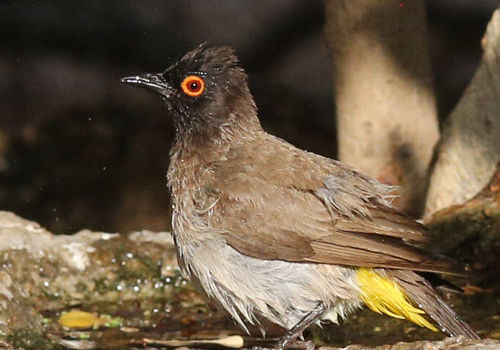
African red eyed bulbul
Pycnonotus nigricansIntroduction: African red-eyed bulbul (Pycnonotus nigricans) can be observed in a wide range of habitats that include arid and semi-arid regions, as long as there is water and patches of trees and shrubs. This includes dry woodland, riverine bush and shrubby watercourses. They are a common visitor to gardens in drier regions of Namibia, usually grateful for a full bird bath to drink from.
Distribution: Common and widespread throughout Namibia less for the southern Namib Desert.
Diet: Will eat a wide variety of fruits, swallowing berries whole. Also eats flower petals and probes flowers for nectar. Partial to spiders and insects as well.
Description: Blackish (nigricans) dark chin and throat. Often mistaken for the dark-capped bulbul which has black, not orange, eye rings. This species also has a thickly feathered (Pycnonotus) back.
Breeding: Usually 2 or 3 eggs are laid between December and February in a nest made of dry grass and twigs, held together by spider web. The eggs are incubated for around 12 days.
Size: 20cm.
Weight: 30g.
.png?width=82&height=85&name=Navigate%20Namibia-03%20(1).png "Navigate Namibia")