

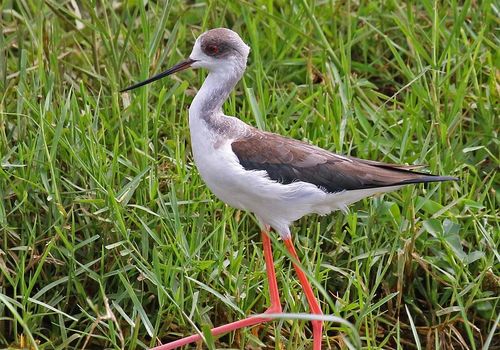
Black winged stilt
Himantopus himantopusIntroduction: Black-winged stilts (Himantopus himantopus) are widespread and common in Namibia favouring both inland and coastal wetlands, floodplains and papyrus swamps as well as water bodies such as sewage farms.
Distribution: Swakopmund and Walvis Bay, Etosha, Caprivi. Scattered populations can be found throughout Namibia less for the southern Namib Desert.
Diet: Forage singly or in groups, pecking food from the surface of the water such as small insects, spiders, tadpoles and fish.
Description: Large shorebird with characteristic long, pinkish-red legs and a needle-type bill protruding from a small head. These long legs project well-beyond the tail tip in flight, giving them the longest legs relative to body size of any bird. Himantopus is Greek for 'strap-foot'.
Breeding: A raised saucer-shaped nest is built on damp mud or a vegetation structure close to the water's edge made of a substantial amount of plant material. Nests are always in danger of rising water levels following heavy rain. Between 2 and 5 eggs are laid year-round.
Size: 40cm.
Weight: 165g.
.png?width=82&height=85&name=Navigate%20Namibia-03%20(1).png "Navigate Namibia")