

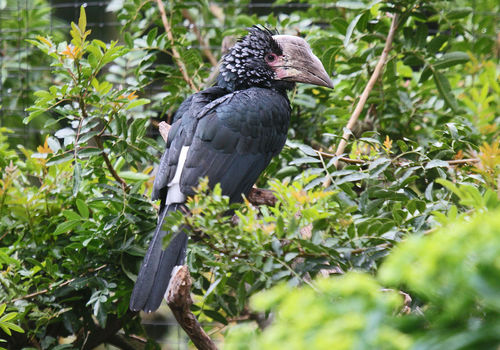
Trumpeter hornbill
Bycanistes bucinatorIntroduction: Trumpeter hornbills (Bycanistes bucinator) inhabit moist woodland and mangroves along riparian strips of forest in Namibia. Usually they are found in pairs or small family groups of 3 to 5. Trumpeters often roost near their nest and stand in large trees on hillsides.
Distribution: Eastern Caprivi Strip only.
Diet: Small fruits such as figs, jackal-berries and cultivated fruits such as guavas, litchis and pawpaw. Woodlice, millipedes, caterpillars, birds' eggs, crabs and spiders are also taken.
Description: Mostly black with a white rump. Long, de-curved, dark grey to black bill, yellow tipped. This medium-sized hornbill so-called because of its braying and trumpeting calls on take-off. Bucinator is the Latin word for trumpeter.
Breeding: Eggs are laid in natural cavities in tree trunks or large branches. Usually 2 or 3 eggs are laid between September and January with an incubation period of 24 days.
Size: 50 to 65cm.
Weight: 720g.
.png?width=82&height=85&name=Navigate%20Namibia-03%20(1).png "Navigate Namibia")