

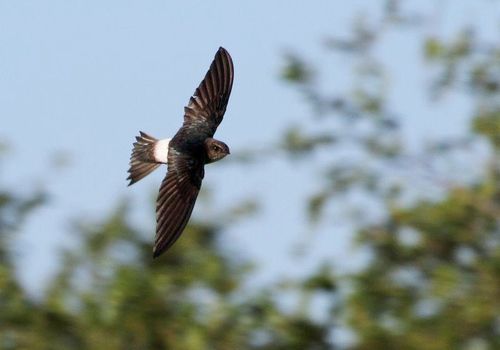
Horus swift
Apus horusIntroduction: Horus swift (Apus horus) forage over open habitats including desert and semi-desert, grassland, savannah, rivers, lakes and coastal dunes, from sea level to 3,000m. Generally they avoid mountain tops and human settlements.
Distribution: Only a few scattered populations can be observed in Namibia; Epupa Falls, Katima Mulilo/Zambezi River area, Windhoek, Waterberg Plateau and Erongo Mountains.
Diet: Diverse diet including weevels, spiders and ants, bugs, termites, butterflies, flies, wasps and beetles.
Description: Often confused with little swift and white-rumped swift. Mainly silent.
Breeding: Occupies nests excavated by other birds such kingfishers, martins and bee-eaters. Lays between 2 and 4 eggs between October to Apri with an incubation period of 28 days.
Size: 15cm.
Weight: 26g.
.png?width=82&height=85&name=Navigate%20Namibia-03%20(1).png "Navigate Namibia")