

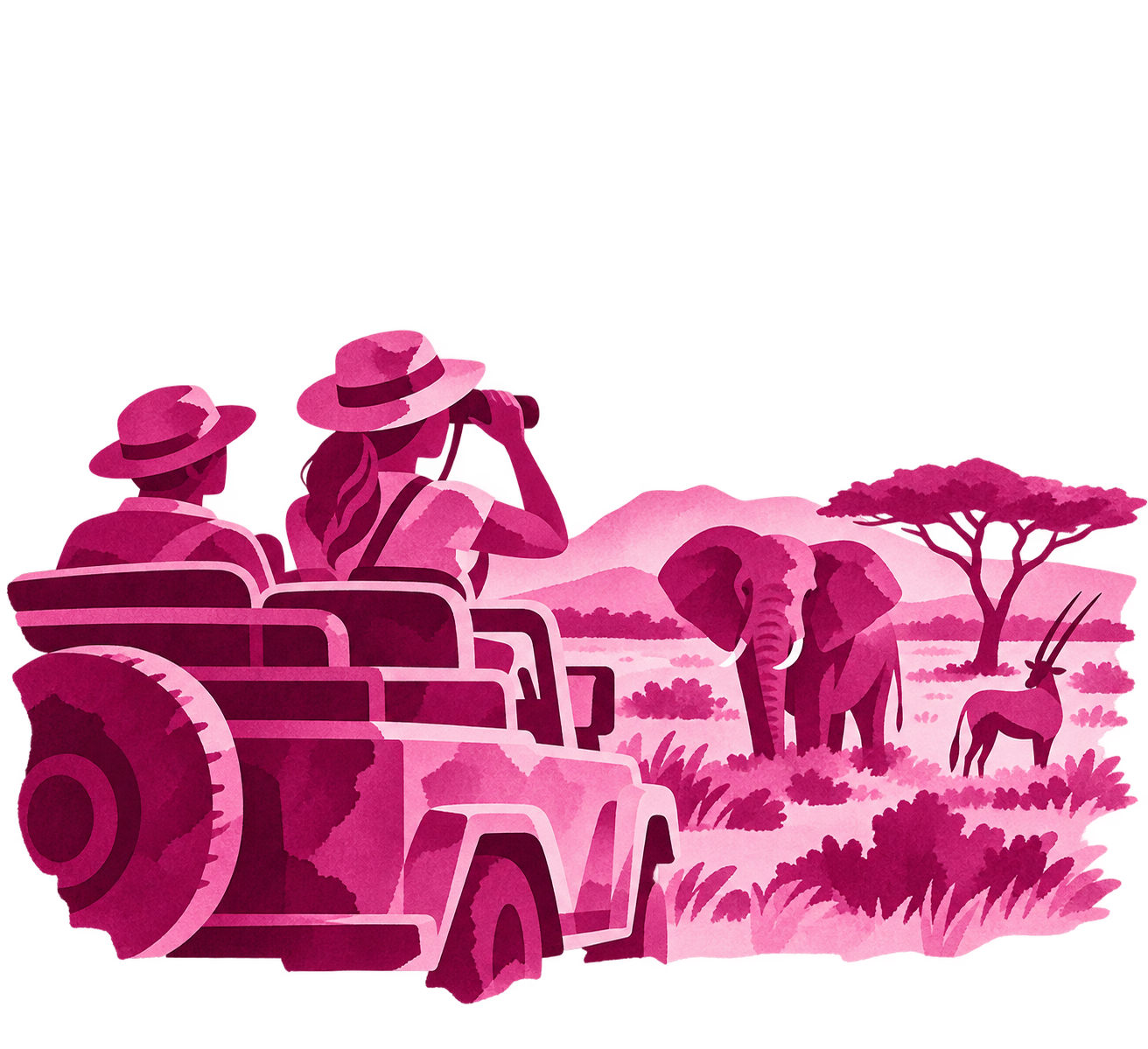
Wildlife Safety & Responsible Encounters
Namibia’s wildlife is one of its greatest attractions, but wild animals remain wild. Keep your distance, follow local instructions and never confuse familiarity with safety.
Namibia’s wildlife is not part of a theme park.
Animals may become accustomed to vehicles, camps or people, but that does not make them tame.
Most wildlife encounters are completely uneventful when travellers give animals space and follow the rules of the park, lodge or campsite.
Do not approach wild animals
If an animal is close enough that you are wondering whether you should move closer, the answer is usually no.
Wild animals can react quickly and unpredictably when they feel threatened, cornered or surprised.
This applies to large animals such as elephant, rhino and buffalo, but also to baboons, snakes, scorpions and smaller animals that travellers sometimes underestimate.
Never leave your vehicle in a national park unless permitted
In parks such as Etosha, visitors must remain in their vehicles outside designated rest camps, viewpoints and other authorised areas.
The fact that the landscape looks empty does not mean it is safe to wander around.
Follow signs and park instructions rather than treating an apparently quiet roadside as an invitation to stretch your legs.
Elephants
Elephants deserve particular respect.
Give them a wide berth, never block their path and never place your vehicle between members of a herd.
A breeding herd with calves may be especially protective.
If an elephant faces your vehicle, stops feeding, spreads its ears, shakes its head, approaches repeatedly or otherwise appears uncomfortable, increase the distance calmly.
Do not rev the engine, hoot or try to force it out of the road.
Predators
Lions and other predators may appear relaxed around vehicles, but they remain fully capable wild animals.
Stay inside the vehicle and keep doors closed in wildlife areas unless you are in a designated safe place.
Do not lean far out of windows or allow children to sit on window frames.
Baboons and monkeys
Baboons and monkeys quickly learn where people keep food.
Do not feed them and do not leave food visible or accessible.
In areas where baboons are common, close windows and doors when you leave accommodation and follow local instructions about food storage.
Animals that become habituated to stealing from people can become aggressive and may ultimately have to be removed or destroyed.
Snakes
Namibia has venomous snakes, but most encounters are brief because snakes generally avoid people when given the opportunity.
Do not attempt to catch, move or kill a snake yourself.
If you see one near accommodation, keep your distance and alert staff.
Wear closed shoes when walking through bush or long grass and use a torch at night in camps.
Scorpions and other small creatures
Shake out shoes and clothing before putting them on, particularly when camping.
Use a torch when walking at night and avoid putting your hands blindly into holes, under rocks or into wood piles.
Most encounters are prevented by paying attention rather than by worrying about every creature in the bush.
Camping around wildlife
Do not leave food, rubbish or cooking equipment where animals can reach it.
Some campsites are unfenced or situated in wildlife areas, which means animals may move through camp at night.
Follow the campsite’s instructions, use a torch after dark and do not wander away from camp unnecessarily.
Do not run from large animals
If you unexpectedly encounter dangerous wildlife on foot, the correct response depends on the species, distance and circumstances.
There is no single piece of internet advice that safely covers every encounter.
Follow the instructions of your guide or local staff. In areas where walking is permitted, listen carefully to the safety briefing before setting out.
Wildlife on the road
Animals frequently cross roads outside protected areas as well.
Slow down around livestock and wildlife and take particular care around dawn, dusk and at night.
Do not assume that an animal beside the road will remain there as you approach.
Young animals are not abandoned simply because they are alone
Do not pick up, feed or attempt to rescue a young wild animal unless instructed by a qualified wildlife authority.
Parents may be nearby or may return once people have moved away.
If an animal appears injured or genuinely distressed, report it to park staff, a conservancy, lodge staff or the relevant wildlife authority.
Respect creates safer encounters
Most wildlife does not want a confrontation with people.
Give animals enough space to choose what they do next, and the encounter is generally safer for both of you.
.png?width=82&height=85&name=Navigate%20Namibia-03%20(1).png "Navigate Namibia")