

National Parks: Rules, Permits & Practicalities
Namibia’s national parks are generally straightforward to visit, but permits, vehicle rules and access requirements differ between parks, so it is worth checking the details before arrival.
Namibia’s national parks range from Etosha’s famous waterholes to the deep sand of Khaudum and the enormous desert landscapes of the Namib-Naukluft.
Most are easy to visit independently, but the practical rules are not identical everywhere.
Do I need a permit?
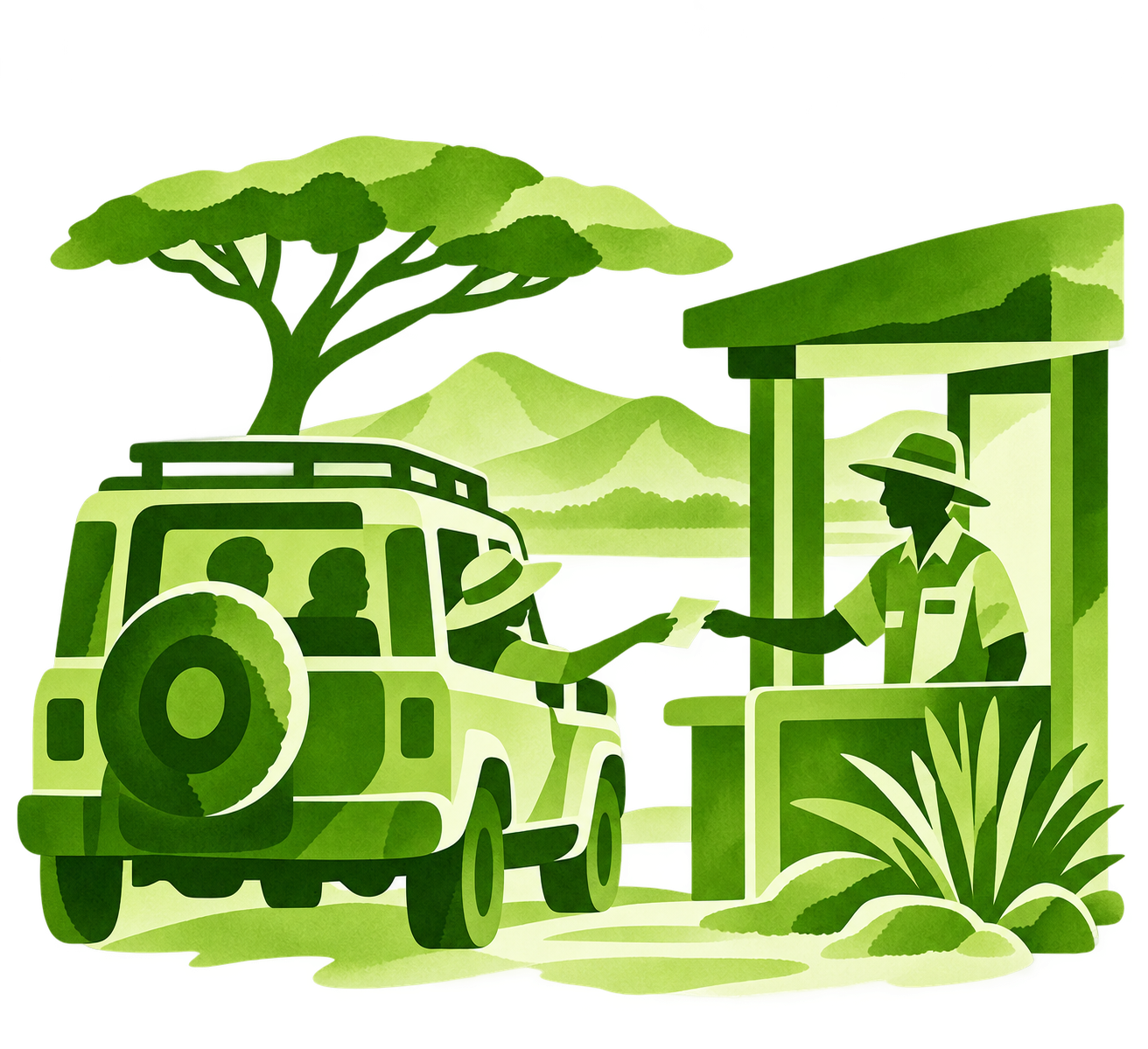
In most Namibian national parks, the necessary entry permit can be obtained on arrival at the park gate.
There are exceptions.
Certain parts of the Namib-Naukluft Park require permits in advance, including areas such as Welwitschia Drive and Sandwich Harbour. If your itinerary includes a less conventional park area, check the permit arrangements before setting off rather than assuming every permit is issued at the gate.
Park fees
Entry and conservation fees apply at many parks and are generally charged according to nationality, age and vehicle category.
Because fee structures can change, we do not publish fixed prices here. Check the current Ministry of Environment, Forestry and Tourism tariff before travelling.
Keep your permit and payment documentation with you while inside the park.
Stay on designated roads
Visitors may not simply leave the marked road network because a sighting looks better from somewhere else.
Off-road driving can damage fragile vegetation, disturb wildlife and create tracks that remain visible for a very long time in arid environments.
Where a park permits specialist 4x4 routes, follow the conditions that apply to that route.
Leaving the vehicle
In wildlife parks, only leave your vehicle in places where this is specifically allowed.
Rest camps, viewpoints, hides and picnic areas may provide designated places to get out, but an apparently empty stretch of road is not one of them.
The fact that you cannot see an animal does not mean there is not one nearby.
Pets and open vehicles
Pets are not permitted in national parks.
Motorcycles, open loading bays and other forms of travel that leave passengers exposed are also restricted in many parks.
Check the specific requirements if you are travelling in an unusual vehicle rather than a standard closed passenger vehicle.
Khaudum is different
Khaudum National Park is a genuine wilderness destination and should not be approached like an ordinary self-drive park.
The Ministry currently requires visitors to travel in a convoy of at least two vehicles, and only one vehicle in the convoy may tow a trailer.
Deep Kalahari sand, few tracks and limited services make proper preparation essential.
The Ministry recommends at least two capable 4x4 vehicles, substantial water and enough food for several days.
Other remote parks
Some parks in the north-east also require more self-sufficiency than visitors may expect.
For example, Nkasa Rupara requires a properly equipped 4x4 and has very limited facilities, while Mudumu can become significantly more challenging during the rainy season.
If a park is remote, check its individual access requirements rather than applying Etosha logic to the entire country.
Gate times
Park opening and closing times may vary seasonally and can be linked to sunrise and sunset.
Check the current gate time locally and plan enough margin to return before closing.
Being able to see the gate in the distance does not make you officially inside it.
Bookings and permits are not always the same thing
A campsite or lodge reservation does not necessarily replace a park-entry permit, and a park permit does not automatically include accommodation.
Make sure you understand which arrangements have already been made and which still need to be completed on arrival.
Follow local instructions
Park staff may impose temporary restrictions because of fire, flooding, road damage, wildlife movements or other operational conditions.
Those instructions take precedence over whatever an old guidebook or saved map says.
The useful rule
Namibia’s national parks are easy to enjoy when you treat the permit, the road and the rules as part of the experience rather than an inconvenience attached to it.
.png?width=82&height=85&name=Navigate%20Namibia-03%20(1).png "Navigate Namibia")