

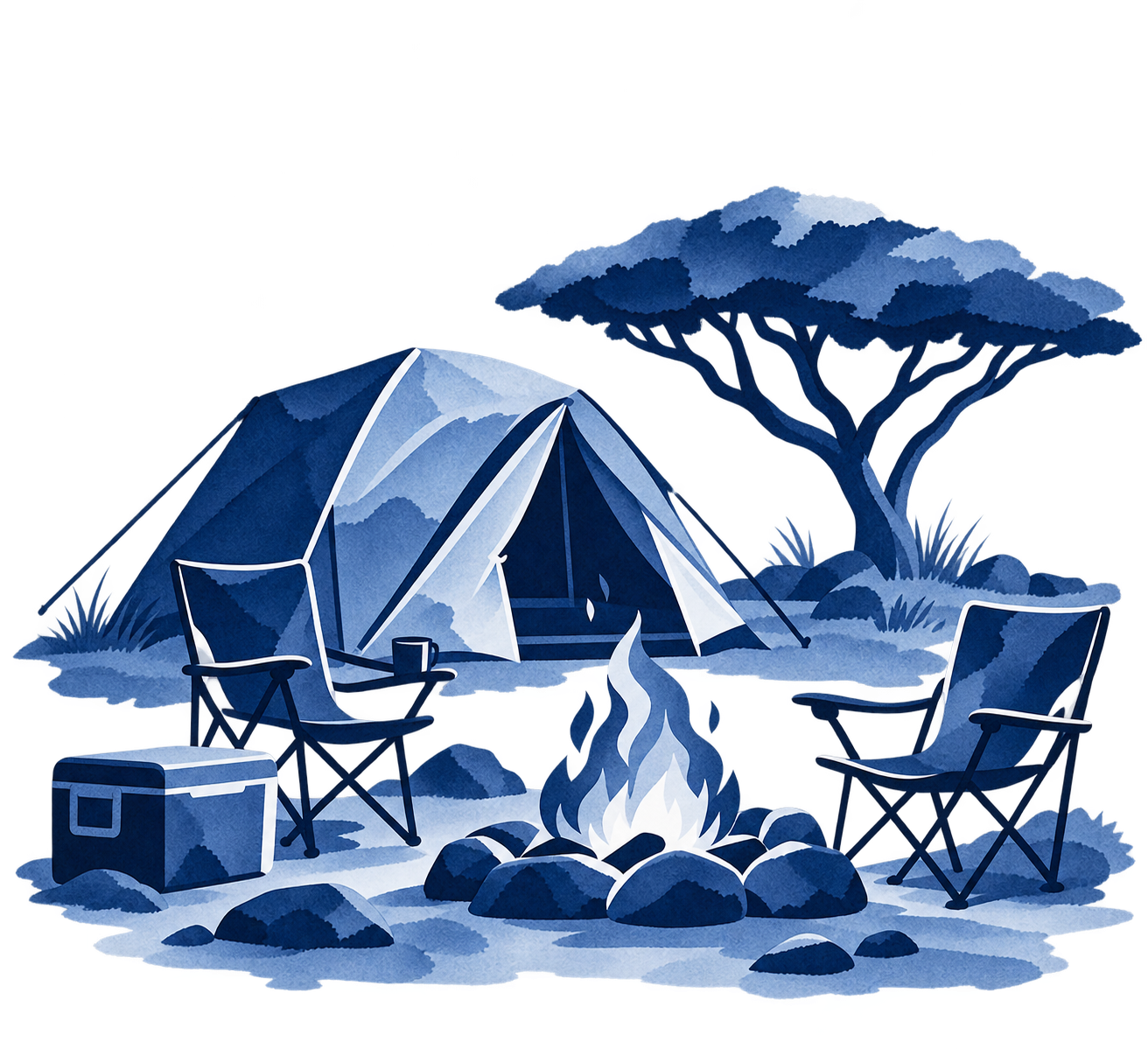
Camping in Namibia
Camping is one of the best ways to experience Namibia, but facilities range from fully serviced campsites to remote wilderness sites where you must be completely self-sufficient.
Camping suits Namibia rather well.
The skies are enormous, the air is dry for much of the year and some of the most memorable places in the country are exactly the sort of places where waking up outdoors feels like the whole point.
What changes dramatically is the level of comfort.
Not all campsites are the same
Some campsites offer private bathrooms, electricity, restaurants, swimming pools and beautifully maintained facilities.
Others provide little more than a designated patch of ground, a basic toilet and the privilege of being very far away from everybody else.
Check what is actually provided before arrival rather than assuming “campsite” has one universal meaning.
Book popular campsites ahead
Campsites in popular areas such as Etosha, Sesriem and along major self-drive routes can fill during the high season and holiday periods.
If a particular campsite is important to your itinerary, reserve it in advance.
Remote campsites may also require advance bookings or permits even where demand is lower.
Camping in national parks
Camping inside a national park is permitted only in designated camping areas and subject to the rules of that park.
Do not simply find an attractive clearing and decide that it will do for the night.
Some parts of the Namib-Naukluft, for example, require specific camping permits, while access to other remote parks may involve additional vehicle and self-sufficiency requirements.
Wild camping
Namibia may look empty, but empty-looking land is not necessarily unowned or available for camping.
Large areas are private farms, communal conservancies, national parks, mining areas or otherwise managed land.
Do not camp on private or communal land without permission, and do not assume that the roadside is automatically public camping space.
Water
Carry enough drinking water for your journey and your stay.
Remote campsites may have no potable water at all, and even where water is available it may be intended for washing rather than drinking.
Check in advance and carry a reserve.
Food and supplies
Stock up before leaving larger towns.
Remote campsites do not generally come with a conveniently hidden supermarket behind the ablution block.
Keep food stored securely and do not leave waste where wildlife can access it.
Campfires
Use designated fireplaces where provided and follow local fire restrictions.
Namibia’s dry vegetation can burn extremely quickly, particularly during the dry season.
Never leave a fire unattended and make sure it is completely extinguished before leaving camp or going to sleep.
Wood
Do not automatically collect firewood from the surrounding area.
Dead wood forms part of the ecosystem, and collecting it may be prohibited in protected areas or on private land.
Buy firewood where it is provided or ask the campsite what is permitted.
Animals in camp
Some Namibian campsites are unfenced.
Elephants, hyenas, baboons and other animals may move through or near camp, particularly in wilderness areas.
Follow local instructions, use a torch after dark and do not leave food accessible.
Leave no trace
Take rubbish with you where no disposal facilities are provided.
Do not leave toilet paper, bottle tops, cable ties, cigarette ends or food scraps behind simply because they are small.
In a desert environment, small rubbish has a surprisingly long life.
Roof tents and camping vehicles
Roof tents are popular on Namibia self-drive trips because they combine transport and accommodation neatly.
Before leaving the rental depot, make sure you know how the tent, fridge, gas equipment, table, chairs and recovery equipment work.
Discovering how the roof tent unfolds for the first time in the dark, in the wind, while everybody is hungry is an entirely avoidable bonding exercise.
Remote camping
If you are heading into genuinely remote areas, carry more water, food and fuel than the theoretical minimum and make sure somebody knows your intended route.
Mobile coverage cannot be assumed.
Your vehicle-rental company, campsite or local guide can advise what level of recovery and emergency equipment is appropriate to the route.
Camping equipment
For travellers who want to combine self-driving and camping, some Namibian rental fleets offer fully equipped camping vehicles with roof tents and essential equipment.
Namibia2Go, for example, includes camping-equipped 4x4 options for routes where carrying your accommodation with you makes sense.
The reward
Camping in Namibia is not always luxurious.
But waking up to an empty desert, a riverbank or a sky that still appears to contain every star ever made has a habit of making the missing room service seem rather unimportant.
.png?width=82&height=85&name=Navigate%20Namibia-03%20(1).png "Navigate Namibia")