

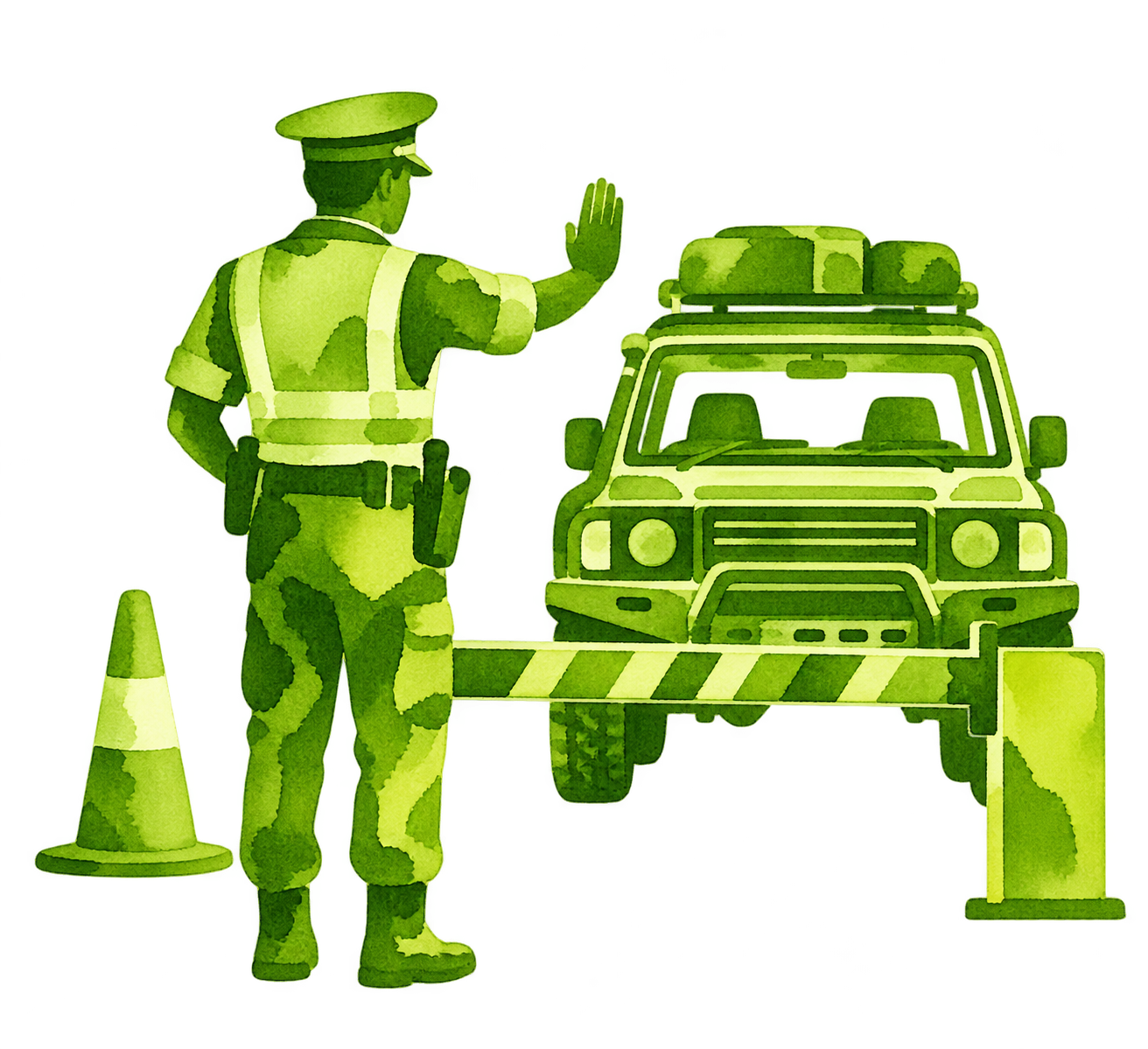
Police, Roadblocks & Fines
Police and traffic checkpoints are a normal part of driving in Namibia. Keep your licence and vehicle documents accessible, follow instructions and deal only with official fines and procedures.
Roadblocks and police checkpoints are not unusual in Namibia.
You may encounter permanent traffic checkpoints on major routes, temporary police operations during busy travel periods, or officers carrying out routine road-safety checks.
For a traveller with the correct documents and a roadworthy vehicle, there is usually very little drama involved.
What happens at a roadblock?
An officer may ask to see your driving licence and inspect the vehicle or its documentation.
Depending on the operation, police or traffic officials may also check matters such as vehicle fitness, seat-belt use, licences, permits, alcohol impairment or other road-traffic requirements.
Slow down when approaching a checkpoint, follow the officer’s directions and stop where indicated.
Keep your documents accessible
When self-driving, keep your valid driving licence and the relevant rental or vehicle documentation somewhere that can be reached without unpacking half the car at the roadside.
If you are travelling across borders, keep any authorisation letters, temporary-import documents and associated paperwork with the vehicle as well.
Speed limits
Namibia has statutory speed limits, and lower limits may be posted for particular roads or areas.
Always follow the road signs and remember that a speed limit is a maximum, not a target.
This matters particularly on gravel roads, where the safe speed may be considerably lower than the maximum permitted speed because of loose material, corrugations, dust, animals or changing road conditions.
Your rental agreement may also impose a lower maximum speed than the general road-traffic rules, especially on gravel.
Speed enforcement
Speed limits are enforced, including through roadside operations and speed-monitoring equipment.
Do not assume that an empty-looking road means enforcement is unlikely — or that high speed becomes safe simply because there is nobody else around.
Alcohol and driving
Do not drink and drive.
Police conduct road-safety and alcohol-enforcement operations, particularly during busy holiday periods and major road-safety campaigns.
If you intend to drink, arrange another driver or suitable transport.
Seat belts and mobile phones
Use seat belts and make sure your passengers do the same.
Using a phone while driving is both distracting and potentially unlawful depending on how it is being used. If you need to handle your phone, pull over somewhere safe before doing so.
If you receive a traffic fine
If an authorised official issues you with a traffic fine, read the notice carefully and follow the official payment instructions.
Fines may be payable through the police station, court or other formally designated process depending on the offence and the notice issued.
Do not hand over money simply because somebody at the roadside asks for an informal cash payment without issuing the appropriate official documentation.
Bribery
Trying to buy your way out of an offence is not part of the Namibian road-trip experience.
If you have committed an offence and are issued a fine, accept the formal notice and deal with it through the official process.
If anyone solicits an unofficial payment, remain polite and ask for the formal charge, receipt or procedure instead.
Roadworthiness
Authorities may prevent a vehicle from continuing if it does not comply with applicable safety or road-traffic requirements.
This is another reason to check a rental vehicle before leaving the depot and to report obvious defects rather than assuming they can wait until the end of the holiday.
Holiday road-safety operations
Police and road-safety agencies frequently increase enforcement during periods of heavy travel, particularly around the December festive season and other long weekends.
Expect more checkpoints during these periods and allow a little additional time for your journey.
If you are stopped
Be calm, courteous and straightforward.
Provide the documents requested, ask if you do not understand what is required and make sure any fine or charge is handled through an official process.
Most roadside checks will take far less time than arguing with somebody who is simply doing their job.
.png?width=82&height=85&name=Navigate%20Namibia-03%20(1).png "Navigate Namibia")