

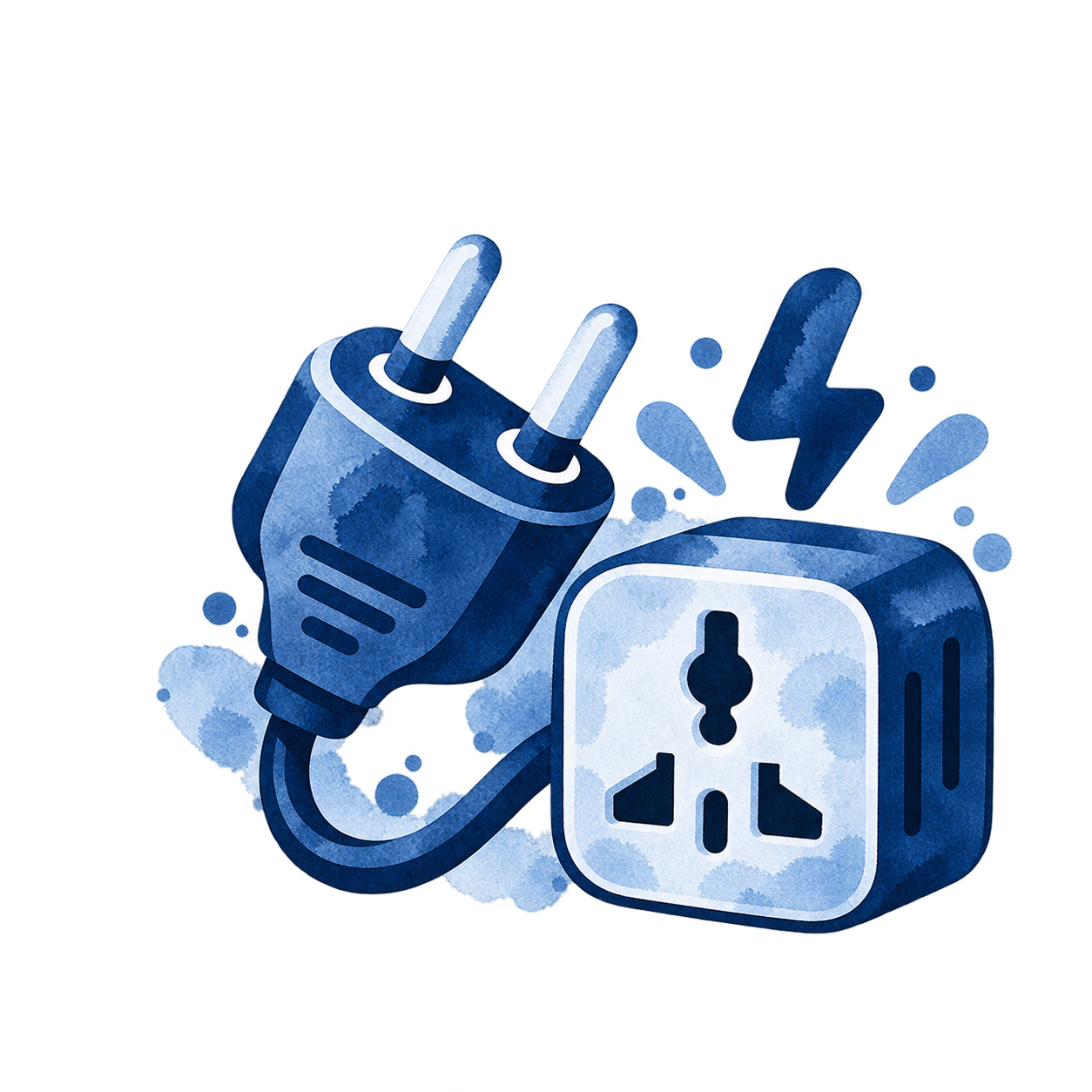
Electricity & Plug Types
Namibia uses a 220–240 volt, 50 Hz electricity supply, with the large round three-pin plug still the most common socket type.
There are few travel frustrations quite as immediate as arriving with a flat phone and discovering that your carefully packed “universal” adapter is not quite as universal as advertised.
Namibia operates on a 220–240 volt electricity supply at 50 Hz. The traditional Namibian socket is the large, round three-pin type also associated with South Africa.
Which plug do I need?
The most common socket is Type M, with three large round pins arranged in a triangle. Older Type D sockets can also occasionally be encountered, while newer or renovated buildings may have additional socket types or USB charging points.
If you are buying an adapter before travelling, look specifically for one suitable for Namibia or South Africa rather than assuming that a generic European or African adapter will fit.
Do I need a voltage converter?
That depends on the appliance.
Most modern phone chargers, laptops, cameras and similar electronics are designed to accept a range of voltages. Check the small print on the charger: if it says something such as “100–240V, 50/60Hz”, you normally need only the correct plug adapter.
If an appliance is designed only for 110 or 120 volts, a plug adapter on its own is not enough. You will need a suitable voltage converter or transformer.
This is particularly worth checking for high-powered appliances such as hairdryers, curling irons and some electric shavers.
Charging at lodges and camps
Most established hotels, lodges and guesthouses provide normal mains electricity and charging facilities, although the exact socket arrangement varies.
Remote properties may generate their own electricity through solar power, generators or a combination of systems. In these places, electricity may be available only at certain times or high-energy appliances may be restricted.
If you are travelling somewhere particularly remote and need to charge specialist equipment, medical devices, camera batteries or a drone, ask the property in advance rather than assuming a constant 24-hour supply.
Load shedding and power interruptions
Short power interruptions can occur from time to time, as they can anywhere, but travellers should not assume that Namibia follows exactly the same load-shedding patterns they may have encountered elsewhere in southern Africa.
Many tourism establishments have backup power or solar systems, although what remains operational during an outage varies from property to property.
A power bank is worth packing
A good power bank is particularly useful on self-drive journeys, long activity days and stays in remote areas.
It is also useful for the much more common emergency of somebody discovering at sunset that they spent the entire day taking photographs and now have 3% battery left.
Before plugging anything in
Remember that a travel adapter changes the shape of the plug. It does not change the voltage.
If you are uncertain about an appliance, check its voltage rating before plugging it into a Namibian socket.
.png?width=82&height=85&name=Navigate%20Namibia-03%20(1).png "Navigate Namibia")